Showing posts with label Writing Help. Show all posts

Friday, March 5, 2021

Peer Review

 Entry 37:

Reflection

Topic: Peer Review

    A peer review is designed to assess the quality, validity, and originality of articles before its publication. The main goal of peer review is to maintain the integrity of science by filtering out any invalid and poor quality articles.
    Peer reviews check the authors writing to make sure that everything is good before it gets published, these are meant to be helpful so that the article makes sense to any readers and are entirely credible sources for others to use. 
    I have done peer reviews in other classes but the most recent peer reviews I have done in other college classes were in my creative writing classes and it was for workshop, we more so offered critiques so that their poems and stories were good so that for our writing portfolio, everything sounded good. 
    The peer reviews in this class are a bit more work and we have less partners but more to read, also the work is more in depth whereas in my creative writing class we were writing things that did not require research and were meant to be fun to read or write. 

Tuesday, March 2, 2021

Works Cited Page

 Entry 35

Research/Multimodal

Topic: How to create a works cited page

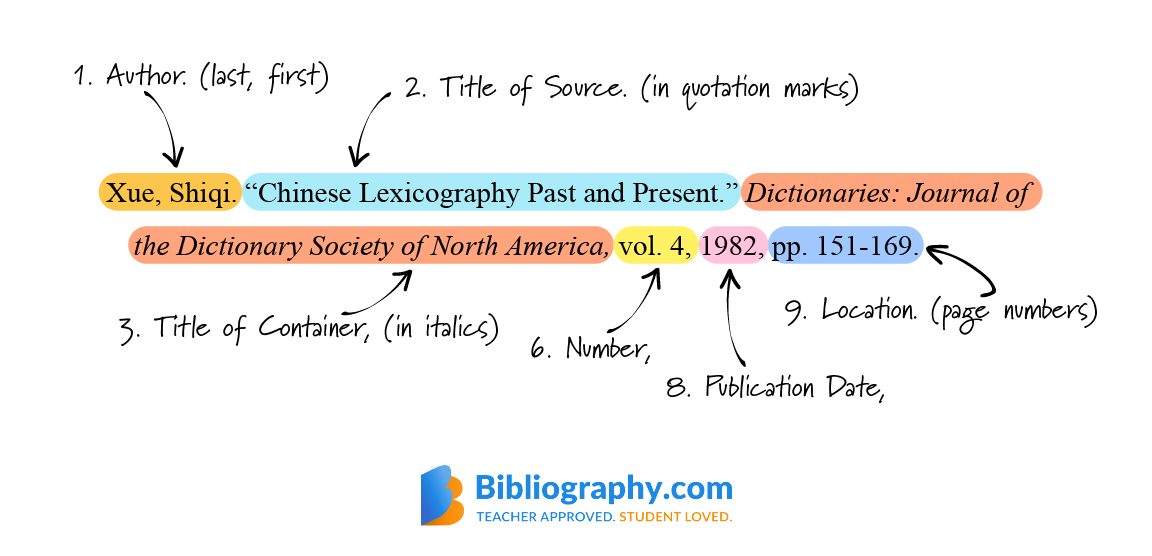
When you write a paper and are using direct quotes, you need to cite your sources and then at the end of your paper you should have a works cited page. If you are unsure how to create one google docs has an add-on feature that can help, there are citation generators or you could use the internet to find the format you need. 

There are a variety of writing formats to use MLA, APA and more, those two are the only ones I have ever really used seriously in writing. 

MLA Format Citation Generator (Free) & Quick Guide | Bibliography.com

MLA^

citing apa books | Citation format, Apa 6th edition, Apa citation format

APA^

Tuesday, February 16, 2021

Logical Fallacies (Project 2-Things to Avoid)

 Entry 25:

Writing Help/Research

Topic: Logical fallacies 

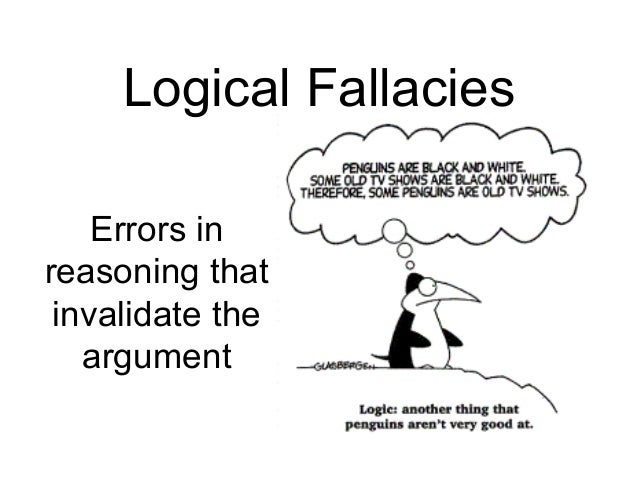
    A logical fallacy is when there is an error in the reasoning that then renders the argument invalid. As we are working on project 2, I was reading over the handout and it said to avoid logical fallacies. 
I am taking critical thinking and in our textbook it talks a lot about logical fallacies. 
    The reason we do not want these in a paper that we are trying to create a debate/argument over is because it would take strength away from the argument and any points you are trying to make. Other reasons you don't want to use a logical fallacy is simply because they are wrong and dishonest. 
Image result for logical fallacy
There are 5 common types of logical fallacies (the article that I used had 15 if you would like to check it out-link is at the bottom):
A summary of each from the link-
1. Ad Hominem , ad hominem replaces logical arguments with "attack-language" that does not relate to the truth on the issue. 
2. Straw Man, strawman argument just takes your opponents "weak" argument and uses it against them. By default theirs will sound a lot better. 
3. Appeal to Ignorance, whenever someone says something they know nothing about in support of their argument. 
4. Circular Argument, an argument that just continually repeats itself/basic assumption with no further reasoning-does not go anywhere. 
5. Casual Fallacy, any logical breakdown when identifying a cause.
Illustration of three common logical fallacies and their definitions
These are examples of logical fallacies. 

Monday, February 15, 2021

Guided Question (Week 6, Question 2)

 Entry 24: 

Research

Topic: How does a thesis work?

    As we work on project 2, we need to find our argument, create a thesis to build our paper around. In order to understand how a thesis works, we need to know what a thesis statement is. A thesis is a statement or theory that is put forward as a premise to be maintained or proved. 
A thesis works by clearly identifying the topic being discussed, the thesis statement belongs in the first paragraph (introductory paragraph). 
    It is important to note that a thesis statement does not state a facts, but rather an opinion for you to prove. It always takes a stand to be justified later. 
Image result for thesis statement

    A thesis works when you can present a topic and be able to debate it. If you cannot take a stand, you will struggle to answer questions and debate- therefore you have no thesis. 

Friday, February 12, 2021

Resume Writing

 Entry 22: 

Research (With Picture examples) 

Topic:  Resume Writing

    Since this is a skill that was pushed on me and one that I think is very practical as we all are going to college to get our dream jobs or just to get a degree to buff up a resume I wanted to give tips on how to make a resume. 
    First off, what is a resume? (I am sure you know...). A resume is a document that is created and used by a person to present their background, skills, and accomplishments to obtain a job. 
How do you write a resume?
1. Pick a format
  • Do not write anything, just figure out how you want it to look overall. 
2. Start with basic information
  • Your name (first, last, maybe middle inital),
  • Phone number (whatever is the best way to reach you, preferably your cell phone.)
  • Your personal email address (it should be something professional, not something you made when you were 12 and wanted to be funny).
  • Address 
  • Anything else relevant to the job: personal URL, social medias, etc.
3. Your work experience + any other experiences you have
  • Your past employment or volunteer activities
  • Any experience relevant to the job would be helpful!
4.Your education
  • College experience/high school experience. What type of degree you have earned (if any).
5. Skills and Interests
  • They want to see what you like to do and what you can do. This part is not necessary though. 
TIP: Most employers do not want to read your resume if it is over 2 pages, most prefer you to keep it all to one page/ 


EXAMPLES OF RESUMES: 
Image result for resumeImage result for resumeImage result for resume

Friday, February 5, 2021

Breaking Barriers

Entry 15:

Research, Reflection

Topic: Breaking mental barriers
Image result for breaking mental barriers in writing

I     have used this article before but it talks about several different things, each are important in writing. According the article that I am using for this blog, it says that we need to break mental barriers to writing. 

Most important tips from article- blog.typeset
In order to break mental barriers: 
1. Practice every day, write 1,000 words a day about your topic. Each day you will find new and better ways to talk about your topic. 
2. Being resistant at first with your writing. 
3. Your writing should reflect your struggles 
4. Good writers are also typically good readers, just do not copy their writing style- make sure to keep your own voice. 
5. Let writing assist your thought process, the more you write the better quality you will produce. 

    I think it is important to note all of the ways to use our thoughts and writing into more effective and efficient work. We write and read every day in texts, emails, or schoolwork. So we should know how to get out of our heads to get writing done. These tips can be used for other classes or any type of writing. If you are unsure what to say, just start saying it and edit later. According to the article, in order to get out of your head and write good, you should struggle and be resistant. It is important to keep your mind active by writing every day about a specific topic or anything. 

Thursday, February 4, 2021

How to become good at academic research writing?

 Entry 14: 

Research, Multimodal Design:

Topic: How to become good at academic research writing? 


Image result for How to become good at academic research writing?
    In this article, it tells us how we can become good at academic research writing. Listing 5 things to do to achieve excellence in this. 
1. Collect as many references as possible- read them through thoroughly. Understanding and having multiple academic resources helps to write good papers as you will understand your topic more in depth. 
2. Use your research writing process as a way of thinking. Find alternative methods to explaining your concept more. 
3. Give a review of the best papers in your domain. Write a one page summary and be able to answer questions about them in the summary. Be able to publish what you write about. 
4. Share your paper with friends and peers. Ask them questions: "what did you understand?" this should show if you gave a clear, concise explanation of your topic.
5. Write the way you talk. Record yourself explaining your research, see what people understand and write about it. 
6. Weed out unnecessary parts from your research. 

    As we work on academic research writing, I thought it was important to note what is good and what isn't. Tips on how to do better. Gathering research on what others find useful for them when writing and then practicing different methods. I often ask friends who have no idea what I am talking about to read over my work because if they can guess the main points of my argument or explanations then I did a good job explaining what I needed to. I have never tried summarizing what I read in a review format, I guess I should try that. 

Thursday, January 28, 2021

Searching Databases

Entry 11:

Research/Reflection

Topic: Searching Databases

    As we are in need of answers to questions, whether for personal questions or for a research paper, we have research options. We can search through a variety of databases depending on what we need. So as we work on our research papers for class, we were told to use keywords in the database to find the best results. Further elaboration on searching databases: (image below)
Image result for searching databases
Some tips included in this image:
1. Do not use full sentences, less is more (keywords)
2. Be able to narrow your topic ONLY to the main points
3. Think of synonyms for your main concepts
4. Utilize Boolean in you search strategy.
5. Start broad and work your way to specifics 
6. Understand your database system
7. Utilize the search filters. 
Personal experience: 
    Most useful tricks for me? Narrowing the search to "English" and whatever source type I am looking for. I also use specific words so my results are right to the point. Further options that could be used would be things like a specific author, title or more. It would take keywords from the search and include them in the title options. 

Friday, January 22, 2021

Guided Questions Answered (Week One)


 Entry 3:

Multimodal 

Topic: Brainstorming strategies 


Types of Brainstorming - Brainstorming- instructional strategy

 1. Freewriting:

  • Let your thoughts flow out on a piece of paper or on your computer screen and just write. Set a limit for however long you feel is good (10-20 minutes or until you reach a certain page amount) and just go for it. When the time is up, read over it. Pick things that you like and then go with that and start your research.  

2. Looping:
  • Similar to the freewrite method but going a little bit farther. Move in groups and write for 5-10 minutes. Move onto another piece and do the same things a couple more times. Analyze what you have done and then develop what you found using this method. 
3. Listing:
  • Start jotting down ideas, write a sentence for each and then group together similar ideas and/or pick your favorite idea from the list. 
4. Idea mapping:
  • Write the subject in the center of a page and then work out the details around the idea.
5. Researching:
  • Just start browsing ideas until one really sticks out and then continue exploring the idea. 
6. Ask questions:
  • "What if”, “pros and cons”, so on. 


Finals thoughts

 Entry 67: Topic: Thoughts     I am slowly but surely, running out of things to talk about in my blog. As time has been progressing I keep f...