Showing posts with label Research. Show all posts

Saturday, February 27, 2021

The Evolution of the Written Word

 Entry 33:

Research 

Topic: The Evolution of the Written Word

Chapter 17 – Origins and Evolution of Writing Systems | Language Evolution
Writing is a form of communication and there is a wide range of ways to go about writing, all different than the last and continually advancing throughout time. Writing changes with society and culture change, writing technology has been evolving to be easier, read faster, get information out quicker,  have less errors. From clay writing tablets, hieroglyphics, paper made from trees with the use of ink to write, written words, to writing on typewriters to computers, to writing and using emoticons on phones in texts and more to express words and meanings. 

History of writing - Wikipedia

Link: https://www.psychologytoday.com/us/blog/statistical-life/201612/the-evolution-the-written-word


Tuesday, February 16, 2021

Logical Fallacies (Project 2-Things to Avoid)

 Entry 25:

Writing Help/Research

Topic: Logical fallacies 

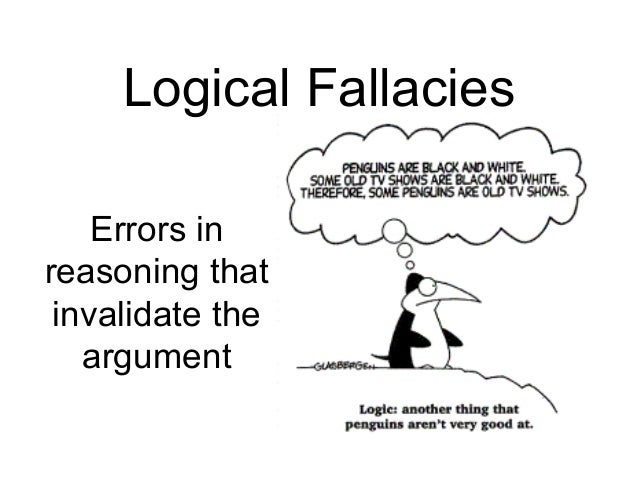
    A logical fallacy is when there is an error in the reasoning that then renders the argument invalid. As we are working on project 2, I was reading over the handout and it said to avoid logical fallacies. 
I am taking critical thinking and in our textbook it talks a lot about logical fallacies. 
    The reason we do not want these in a paper that we are trying to create a debate/argument over is because it would take strength away from the argument and any points you are trying to make. Other reasons you don't want to use a logical fallacy is simply because they are wrong and dishonest. 
Image result for logical fallacy
There are 5 common types of logical fallacies (the article that I used had 15 if you would like to check it out-link is at the bottom):
A summary of each from the link-
1. Ad Hominem , ad hominem replaces logical arguments with "attack-language" that does not relate to the truth on the issue. 
2. Straw Man, strawman argument just takes your opponents "weak" argument and uses it against them. By default theirs will sound a lot better. 
3. Appeal to Ignorance, whenever someone says something they know nothing about in support of their argument. 
4. Circular Argument, an argument that just continually repeats itself/basic assumption with no further reasoning-does not go anywhere. 
5. Casual Fallacy, any logical breakdown when identifying a cause.
Illustration of three common logical fallacies and their definitions
These are examples of logical fallacies. 

Monday, February 15, 2021

Guided Question (Week 6, Question 2)

 Entry 24: 

Research

Topic: How does a thesis work?

    As we work on project 2, we need to find our argument, create a thesis to build our paper around. In order to understand how a thesis works, we need to know what a thesis statement is. A thesis is a statement or theory that is put forward as a premise to be maintained or proved. 
A thesis works by clearly identifying the topic being discussed, the thesis statement belongs in the first paragraph (introductory paragraph). 
    It is important to note that a thesis statement does not state a facts, but rather an opinion for you to prove. It always takes a stand to be justified later. 
Image result for thesis statement

    A thesis works when you can present a topic and be able to debate it. If you cannot take a stand, you will struggle to answer questions and debate- therefore you have no thesis. 

Friday, February 12, 2021

Resume Writing

 Entry 22: 

Research (With Picture examples) 

Topic:  Resume Writing

    Since this is a skill that was pushed on me and one that I think is very practical as we all are going to college to get our dream jobs or just to get a degree to buff up a resume I wanted to give tips on how to make a resume. 
    First off, what is a resume? (I am sure you know...). A resume is a document that is created and used by a person to present their background, skills, and accomplishments to obtain a job. 
How do you write a resume?
1. Pick a format
  • Do not write anything, just figure out how you want it to look overall. 
2. Start with basic information
  • Your name (first, last, maybe middle inital),
  • Phone number (whatever is the best way to reach you, preferably your cell phone.)
  • Your personal email address (it should be something professional, not something you made when you were 12 and wanted to be funny).
  • Address 
  • Anything else relevant to the job: personal URL, social medias, etc.
3. Your work experience + any other experiences you have
  • Your past employment or volunteer activities
  • Any experience relevant to the job would be helpful!
4.Your education
  • College experience/high school experience. What type of degree you have earned (if any).
5. Skills and Interests
  • They want to see what you like to do and what you can do. This part is not necessary though. 
TIP: Most employers do not want to read your resume if it is over 2 pages, most prefer you to keep it all to one page/ 


EXAMPLES OF RESUMES: 
Image result for resumeImage result for resumeImage result for resume

Monday, February 8, 2021

Guided Question (Week 5, Question 1; Part 1)

 Entry 19:

Research + Reflection + Multimodal

Topic: What is secondary research? 

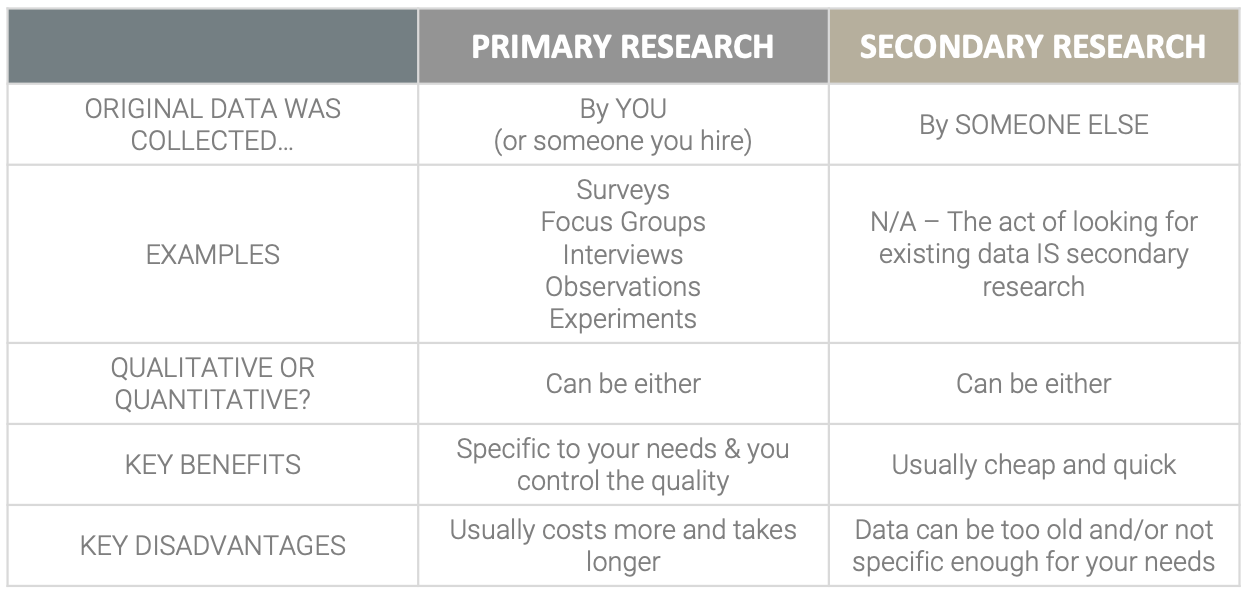
    According to my research and things that we have already discussed in class. Secondary research is: a research method that uses existing data. Documents that contain secondary research can be found in a variety of places like public libraries, websites, or data obtained from filled in surveys and so much more. The article I found talking about secondary research said that secondary research is more cost-effective than primary research. 
    In this picture it explains the difference between primary and secondary research in a chart like format: 
Summary of Primary vs. Secondary Market Research
Ironically, looking at this chart, I think I for a while misunderstood the research methods and flipped them around. 
    In the link that I used it gives more in depth examples if you would like to use it: questionpro 
Reflection:
    Knowing how to find this secondary research may take a while because you need to find exactly what suits your topic, but it will most likely not take as long to find as primary would. However, primary research would help you find exactly what you are looking for. I think that it is beneficial to have both, however you can probably find a survey and all of those things without having to do too much work.

Saturday, February 6, 2021

Genre Conventions

 Entry 16: 

Research, Reflections

Topic: Genre Conventions

What are genre conventions? 

    Genre conventions are story elements, all the little things that allow us to distinguish what the genre is. Each genre has specific story elements that allow the readers to distinguish what genre they are reading, this is a genre convention (the elements, structures, formulas). A way to figure out what the genre of something is, figure out the story (action), plot, character, and the setting- this should tell you the genre. 
    Each genre imposes certain conventions, the choice determines what is possible to do within the story. That means that there will be conventional settings, events and roles specific to the genre. Genre has visceral appeal to its readers/audience. 
Image result for genre conventions
This picture gives an example of genre conventions. 
In this link: writingstudio, they talk about conventional settings, events and roles in the crime genre.     Further explaining genre conventions: 
Conventional settings: the setting of the murder will have its particular characteristics.
Conventional events: there must be a crime
Conventional roles: there will be a detective character that discovers clues and suspects 
(Dercksen,Daniel).

This is important because if someone is writing they should know their audience and what genre they are writing about. Making sure to follow exactly what their genre typically contains. As writers there is a wide range of genres, knowing the differences and the characteristics of genres is a key factor to success. 


Friday, February 5, 2021

Breaking Barriers

Entry 15:

Research, Reflection

Topic: Breaking mental barriers
Image result for breaking mental barriers in writing

I     have used this article before but it talks about several different things, each are important in writing. According the article that I am using for this blog, it says that we need to break mental barriers to writing. 

Most important tips from article- blog.typeset
In order to break mental barriers: 
1. Practice every day, write 1,000 words a day about your topic. Each day you will find new and better ways to talk about your topic. 
2. Being resistant at first with your writing. 
3. Your writing should reflect your struggles 
4. Good writers are also typically good readers, just do not copy their writing style- make sure to keep your own voice. 
5. Let writing assist your thought process, the more you write the better quality you will produce. 

    I think it is important to note all of the ways to use our thoughts and writing into more effective and efficient work. We write and read every day in texts, emails, or schoolwork. So we should know how to get out of our heads to get writing done. These tips can be used for other classes or any type of writing. If you are unsure what to say, just start saying it and edit later. According to the article, in order to get out of your head and write good, you should struggle and be resistant. It is important to keep your mind active by writing every day about a specific topic or anything. 

Thursday, February 4, 2021

How to become good at academic research writing?

 Entry 14: 

Research, Multimodal Design:

Topic: How to become good at academic research writing? 


Image result for How to become good at academic research writing?
    In this article, it tells us how we can become good at academic research writing. Listing 5 things to do to achieve excellence in this. 
1. Collect as many references as possible- read them through thoroughly. Understanding and having multiple academic resources helps to write good papers as you will understand your topic more in depth. 
2. Use your research writing process as a way of thinking. Find alternative methods to explaining your concept more. 
3. Give a review of the best papers in your domain. Write a one page summary and be able to answer questions about them in the summary. Be able to publish what you write about. 
4. Share your paper with friends and peers. Ask them questions: "what did you understand?" this should show if you gave a clear, concise explanation of your topic.
5. Write the way you talk. Record yourself explaining your research, see what people understand and write about it. 
6. Weed out unnecessary parts from your research. 

    As we work on academic research writing, I thought it was important to note what is good and what isn't. Tips on how to do better. Gathering research on what others find useful for them when writing and then practicing different methods. I often ask friends who have no idea what I am talking about to read over my work because if they can guess the main points of my argument or explanations then I did a good job explaining what I needed to. I have never tried summarizing what I read in a review format, I guess I should try that. 

Thursday, January 28, 2021

Searching Databases

Entry 11:

Research/Reflection

Topic: Searching Databases

    As we are in need of answers to questions, whether for personal questions or for a research paper, we have research options. We can search through a variety of databases depending on what we need. So as we work on our research papers for class, we were told to use keywords in the database to find the best results. Further elaboration on searching databases: (image below)
Image result for searching databases
Some tips included in this image:
1. Do not use full sentences, less is more (keywords)
2. Be able to narrow your topic ONLY to the main points
3. Think of synonyms for your main concepts
4. Utilize Boolean in you search strategy.
5. Start broad and work your way to specifics 
6. Understand your database system
7. Utilize the search filters. 
Personal experience: 
    Most useful tricks for me? Narrowing the search to "English" and whatever source type I am looking for. I also use specific words so my results are right to the point. Further options that could be used would be things like a specific author, title or more. It would take keywords from the search and include them in the title options. 

Finals thoughts

 Entry 67: Topic: Thoughts     I am slowly but surely, running out of things to talk about in my blog. As time has been progressing I keep f...